Flashcards Not Sticking? Try This Memory Trick for Japanese Vocabulary
You've run through the deck a dozen times. You mark cards "known," and a week later half of them feel brand new again. If that's where you are, it's not a discipline problem, and it's not your deck's fault either. It's what's missing from each individual card.
Why plain flashcards often don't stick
A typical card pairs a sound with a meaning, "neko means cat," and asks you to hold that pairing together through repetition alone. Nothing connects the sound to the meaning except the number of times you've seen them side by side. It works eventually, but it's slow, because the fact has no structure to grab onto.
It also makes cards blur together. When every card is the same kind of arbitrary sound-meaning pair, stored the same way, similar words start to interfere with each other: was kawa river and kami hair, or the other way round? That's why review sessions can feel like a treadmill: you keep re-learning the same facts instead of building on them.
The trick: give every word a keyword image
Instead of leaving the sound and the meaning to float next to each other, build one small, vivid mental image that links them. Hear neko (cat), notice it sounds like "neck-o," and picture a cat whose neck-o stretches so long it wraps around an entire skyscraper. Now the sound and the meaning aren't just next to each other; they're stuck together in one scene.
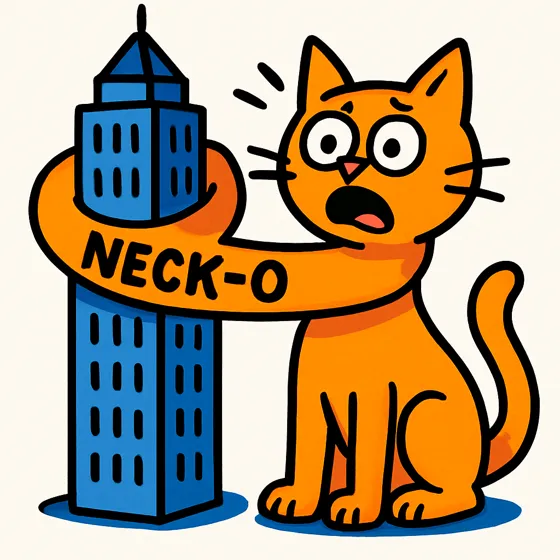
This is the keyword mnemonic method, and it's one of the easiest upgrades you can make to an existing flashcard habit. Our beginner's guide covers the research behind it. You don't need a new app or a new deck to start, just one extra step per card.
One honest caveat: an image gets a word in fast, but it doesn't replace review. Keep your spaced repetition going and keep testing yourself; the image just makes each review more likely to succeed. More on that in why you keep forgetting Japanese words.
How to try it right now
Pull up whatever card is giving you trouble and do this before you move on:
- Say the word out loud and listen for a sound-alike in your own language, even a loose one.
- Build one quick image connecting that sound-alike to the meaning. The stranger or more exaggerated, the better.
- Hold the image for a few seconds. Actively building it, not just reading it, is what makes it stick.
- Write the bridge on the card. Add a few words like "Neck-O: cat around a skyscraper" to the back of the card, so the cue is there every time the card comes up.
Start with the five or six words that keep slipping, not the whole deck at once. Test yourself on them tomorrow and compare with the cards you didn't change.
Where Memzle fits in
Doing this by hand, word by word, is a great way to start, but it takes real creative effort to scale past a handful of cards. Memzle builds the bridge, an illustrated story and audio into every Japanese word from the start, so you get this trick without having to invent an image for each one yourself. For more ready-made examples, see 10 keyword mnemonic examples with pictures.
Remember every word with Memzle
Sound-alike bridges, cartoon stories and audio for every word, starting with Japanese. See how it works.